
NEW-BUILD SNAGGING
New-Build Snagging for visible defects before they are overlooked
Dock Inventories carries out visual, non-invasive new build snagging inspections for newly completed and recently converted properties, recording visible defects, incomplete finishes and presentation issues.
The property is reviewed room by room, with written observations and supporting photographs. Every completed report is internally reviewed before delivery.
Room-by-room visual inspection
Visible defects photographed
Clear snagging schedule
Internal quality review

WHAT THE REPORT MAY INCLUDE
A clear schedule of visible snagging items
The inspection records defects and incomplete finishes that can be reasonably observed without opening up, dismantling or specialist testing. The exact content will depend on the property and the areas safely accessible during the appointment.
Walls, ceilings and finishes
Visible cracking, poor decoration, staining, uneven finishes and incomplete making-good may be recorded where observed.
Doors, windows and joinery
Visible alignment, operation, damage and finishing issues affecting doors, windows, frames, cupboards and other joinery may be noted.
Kitchens and bathrooms
Visible defects affecting fitted units, worktops, sanitaryware, seals, finishes and accessible fittings may be recorded.
Floors and internal fittings
Damage, poor finishing, movement, gaps or presentation issues affecting visible flooring, trims, sockets and fittings may be identified.
External and communal areas
Accessible balconies, terraces, entrances and relevant communal or external areas may be visually reviewed where included in the instruction.
Supporting photographs
Photographs are included to identify each recorded snag and show its visible condition at the time of the inspection.
WHEN IT MAY BE USEFUL
When should a snagging inspection be arranged?
A snagging inspection is most useful while defects can still be raised with the developer, contractor or relevant responsible party.
Before completion or handover
Where access is permitted, an inspection before completion or formal handover can identify visible matters requiring attention before possession is taken.
Shortly after moving in
An early inspection may identify defects or incomplete finishes that become apparent once the property is occupied and used.
Before a defect-reporting deadline
A dated snagging schedule can help organise visible items before the developer’s or contractor’s reporting period expires.
After remedial works
A further visual inspection may be arranged to record whether previously reported items appear to have been addressed and whether any visible concerns remain.
WHY A CLEAR SNAGGING RECORD MATTERS
A structured record for raising visible defects
A snagging report provides a dated schedule of visible defects, incomplete finishes and presentation concerns identified during the inspection.
The written observations and photographs can help the owner, developer, contractor or managing agent understand the items being raised and locate them within the property.
VISUAL, NON-INVASIVE INSPECTION
Snagging report, not a structural survey
Dock Inventories records matters that are reasonably visible and accessible during the appointment. The inspection does not involve opening up the building, dismantling fittings or carrying out specialist testing.
It is not a structural survey, building-control inspection or specialist gas, electrical, plumbing, drainage, heating or damp assessment. Appropriate qualified professionals should be instructed where specialist advice is required.
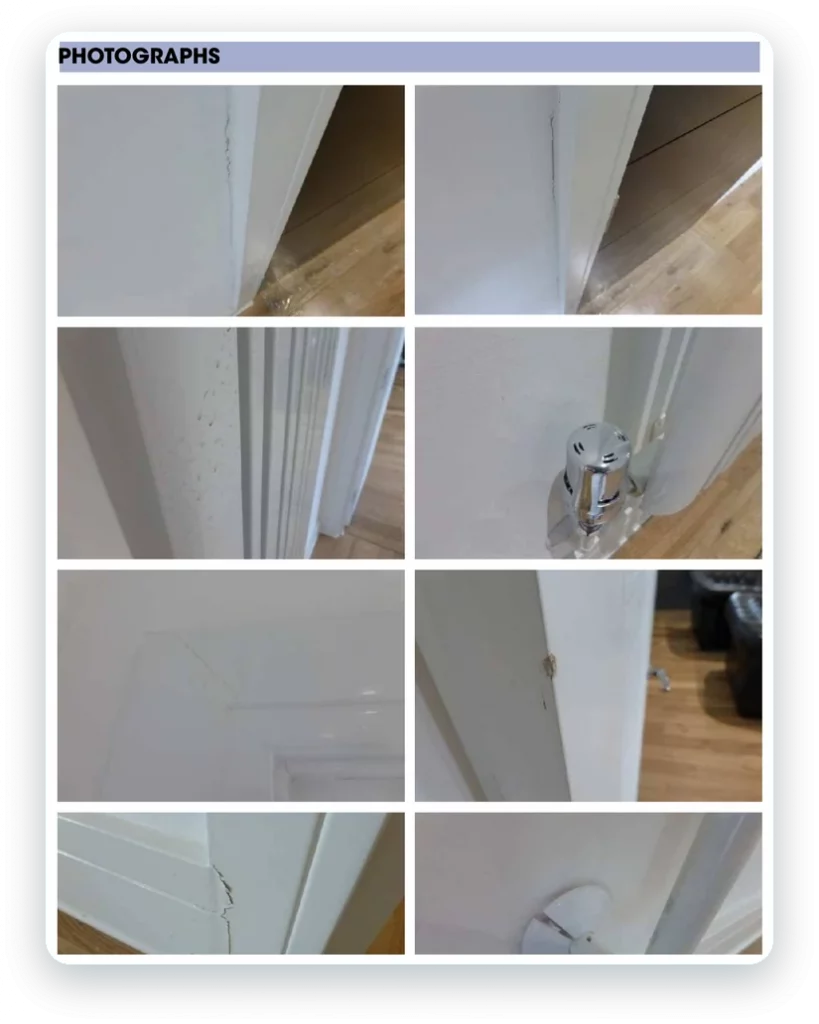
SAMPLE SNAGGING REPORT
See how visible defects are recorded
View an example of how visible defects, incomplete finishes and presentation concerns may be organised room by room, with written observations and supporting photographs.
Room-by-room snagging schedule
Clearly identified visible defects
Supporting photographs for each item
HOW IT WORKS
From booking request to completed snagging report
We confirm the property details, appointment arrangements and any areas to be included before the inspection takes place.
01
Send the booking request
Provide the property address, preferred appointment details, access arrangements and any relevant completion, handover or defect-reporting deadline.
02
We confirm the inspection
Dock Inventories confirms the appointment, access method, inspection scope and agreed report recipient.
03
The property is inspected
The clerk visually reviews the safely accessible areas room by room, recording visible defects, incomplete finishes and presentation concerns with supporting photographs.
04
The report is reviewed and delivered
The completed snagging report is internally checked before being issued electronically to the agreed recipient.
FREQUENTLY ASKED QUESTIONS
New-Build Snagging questions
Answers to common questions about inspection timing, scope, access and report delivery.
When should the snagging inspection take place?
It is usually most useful before completion or handover, shortly after moving in, or before the applicable defect-reporting period expires. The available timing will depend on when access to the property is permitted.
What does the inspection cover?
The clerk visually reviews the safely accessible areas of the property and records visible defects, incomplete finishes and presentation concerns. The precise scope depends on the property and the areas included in the instruction.
Is the snagging inspection a structural survey?
No. It is a visual, non-invasive inspection and does not involve opening up the building, dismantling fittings or carrying out specialist testing. Structural, building-control, gas, electrical, plumbing, heating, drainage, damp and other specialist matters require an appropriately qualified professional.
Can you reinspect completed remedial works?
A further visual inspection may be arranged to record whether previously identified items appear to have been addressed and whether any visible concerns remain. It does not certify the quality or technical adequacy of the remedial work.
Looking for general guidance? Visit our Property Inventory & Inspection FAQs for answers about choosing a service, booking and access, reports, photographs and independent reporting.
READY TO BOOK?
Arrange a New-Build Snagging Inspection
Send us the property details, preferred appointment date, access arrangements and any relevant completion or reporting deadline. We will review the request and confirm the inspection.